
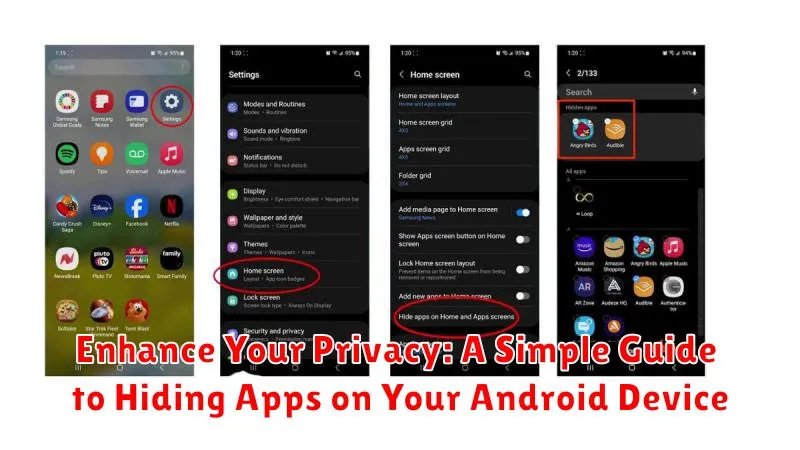
In today’s digital age, privacy is paramount. Our Android devices hold a wealth of personal information, from private conversations to financial details. Protecting this sensitive data is crucial. Many users seek ways to enhance their Android privacy, and one straightforward method is to hide apps. This simple action can add an extra layer of security and peace of mind, keeping prying eyes away from sensitive applications. Whether you wish to hide banking apps, hide dating apps, or simply declutter your app drawer, this guide will provide a clear and concise approach to hiding apps on your Android device.
This guide offers practical steps to hide apps on Android, regardless of your technical proficiency. We’ll explore various methods, from built-in Android features to third-party app hider solutions. Learn how to effectively hide apps from home screen and app drawer, ensuring your personal information remains private. By the end of this guide, you will be equipped with the knowledge to easily manage and hide apps on Android, enhancing your digital privacy and overall mobile security.
Why Hide Apps on Your Android Device?
Protecting your personal information is a primary reason to hide apps. Certain apps contain sensitive data, like banking apps or messaging services, that you may not want readily visible to others who might use your phone. Hiding these apps adds an extra layer of security.
Beyond privacy, hiding apps can help declutter your home screen. A simpler, more organized home screen can improve your phone usage experience by making it easier to find the apps you use regularly. If you have numerous apps that are rarely used, concealing them can streamline your interface.
Hiding apps can also be useful for parental control. If you share your device with children, hiding certain apps can prevent accidental purchases or access to inappropriate content.
Different Methods for Hiding Apps
Several methods exist for concealing apps on your Android device, catering to different needs and technical comfort levels. These methods range from simple built-in launcher options to using dedicated third-party applications. Choosing the right method depends on factors like your device’s manufacturer and your desired level of security.
Generally, these methods fall into a few key categories. You can leverage features directly integrated into your phone’s launcher. Alternatively, numerous third-party apps specialize in app concealment, often offering additional features like password protection or creating disguised vaults. Finally, for pre-installed apps you don’t use, disabling them can effectively remove them from your app drawer.
Each method has its advantages and disadvantages. Built-in features are convenient but may offer limited functionality. Third-party apps provide more advanced options but require installing additional software. Disabling apps is useful for bloatware but may not be feasible for all pre-installed applications.
Using Built-in Launcher Features
Some Android launchers offer built-in features to hide apps without requiring third-party applications. These features can vary depending on the specific launcher you’re using. Check your launcher’s settings for options like “Hide Apps” or “App Drawer Customization.”
Typically, accessing these features involves a long press on the home screen or accessing the launcher settings directly. Once there, you can usually select which apps to hide from the app drawer or home screen. This provides a convenient and often straightforward method for managing app visibility.
Be aware that these built-in features might not offer the same level of security as dedicated app-hiding solutions. Hidden apps may still appear in the phone’s settings or be accessible through search functions. Review your launcher’s documentation for specific details regarding its app hiding capabilities.
Hiding Apps with Third-Party Apps
If your device doesn’t offer built-in app hiding, third-party apps from the Google Play Store can provide this functionality. These apps often offer more advanced features beyond simple hiding, such as password protection or even creating a separate, secure space on your device.
When choosing a third-party app for hiding other apps, it’s crucial to select a reputable app from a trusted developer. Carefully review the app’s permissions to ensure it doesn’t request unnecessary access to your data. Some popular options offer a free version with limited features, allowing you to test the app before committing to a premium version.
Installation and Setup:
- Download a chosen app hider from the Google Play Store.
- Follow the on-screen instructions for installation and setup.
- Typically, you’ll grant the app necessary permissions and select the apps you wish to hide.
These apps usually work by creating a new launcher or a secure folder where you can place the apps you want to hide. Some might replace app icons with less conspicuous ones or completely remove them from the app drawer.
Disabling Pre-installed Apps
Many Android devices come with pre-installed applications, often referred to as bloatware, that you may not need or want. While completely removing these apps often requires rooting your device, which can void your warranty and introduce security risks, you can usually disable them. This effectively hides them from your app drawer and prevents them from running in the background, freeing up resources and enhancing your privacy.
To disable a pre-installed app, navigate to your device’s Settings. Then, proceed to Apps or Application Manager (the exact wording may vary depending on your device and Android version). Locate the pre-installed app you wish to disable in the app list. Tap on the app, and you should see a Disable button. Tap this button to disable the app.
Important Note: Disabling certain system apps can impact the functionality of your device. Exercise caution and research the potential effects before disabling any pre-installed apps. If you experience any issues, you can always re-enable the app by following the same steps and tapping Enable.
Securing Hidden Apps with Additional Protection

While hiding apps provides a first layer of privacy, consider adding extra security measures to safeguard sensitive information. Enabling a strong lock screen is crucial. Choose a complex PIN, password, or pattern to prevent unauthorized access to your device. Biometric authentication, such as fingerprint or facial recognition, offers another layer of security.
Consider using a secure folder or private space feature if your device supports it. These features create an encrypted space within your phone for storing hidden apps and other sensitive data. Access to the secure folder is typically protected by a separate PIN or password.
Be cautious about the permissions you grant to apps, even hidden ones. Review the permissions requested by apps and only grant those absolutely necessary for the app’s functionality. Overly permissive apps can potentially expose your data, even if hidden.
Unhiding Apps When Needed
Retrieving your hidden apps is a straightforward process, varying slightly depending on your device’s manufacturer and Android version. Generally, the process involves reversing the steps you took to hide them.
Common methods for unhiding apps include accessing the app drawer settings, app management section, or home screen settings. Look for options like “Hide apps,” “Hidden apps,” or similar wording. Selecting this option typically reveals a list of hidden applications.
From this list, you can unselect the apps you wish to make visible again. They will then reappear in your app drawer and, if previously added, on your home screen. Remember, the specific steps might differ based on your device’s interface. Consulting your device’s user manual or online resources can provide more detailed instructions if needed.
Using Guest Mode for Enhanced Privacy
Guest Mode offers a convenient way to temporarily share your device without compromising your personal data. It creates a separate, clean profile isolated from your main account. Any apps, data, or settings changes made in Guest Mode are erased upon exit, ensuring your privacy remains intact.
Enabling Guest Mode is simple. Typically, you can access it from the quick settings menu by swiping down from the top of your screen. Look for a user icon or an option labeled “Guest.” Tap it to switch to the Guest profile. Your device will then restart in a clean, factory-default state.
When you’re finished using Guest Mode, simply switch back to your main profile from the same quick settings menu. All guest session data will be deleted. This makes Guest Mode ideal for lending your phone to friends or family, or for using your device in public settings where you want to maintain maximum privacy.
Creating Multiple User Profiles
Creating multiple user profiles on your Android device offers a robust approach to privacy management. This feature allows you to essentially have separate spaces on your device, each with its own apps, settings, and data. This is especially useful when sharing a device with family members or for compartmentalizing different aspects of your digital life, like work and personal use.
Each profile operates independently, ensuring that apps and data within one profile remain inaccessible to others. This means a user logged into the “Work” profile, for example, won’t be able to see apps or data associated with the “Personal” profile. This offers a strong layer of privacy without needing to hide individual apps within a single user account.
The process for setting up multiple profiles varies slightly depending on your Android version and device manufacturer. Generally, you’ll find the option within the “System” or “Users & accounts” settings. Look for the “Multiple users” or “Users” option. From there, you can create new profiles, switch between existing ones, and even set up a dedicated guest profile.
Protecting Your Privacy with App Locks
App locks provide an additional layer of security by requiring authentication before accessing specific applications. This prevents unauthorized access even if someone bypasses your device’s main lock screen. Several app lock solutions are available on the Google Play Store, offering varying features such as PIN, pattern, or biometric authentication.
When choosing an app lock, consider features like intruder selfies, which capture photos of anyone attempting to unlock your apps without permission. Some apps also offer fake crash screens to further deter unauthorized access.
Using an app lock is straightforward. After installing your chosen app, you’ll typically select which applications you want to protect. You’ll then set up your preferred authentication method. From that point forward, anyone attempting to open a protected app will be prompted to authenticate.
