

Is your Android phone lagging, freezing, or just generally slow? A sluggish phone can be incredibly frustrating, impacting your productivity and overall mobile experience. In this article, we’ll explore practical tips and tricks to speed up your Android phone and restore its performance. We’ll cover everything from simple adjustments to more advanced techniques, helping you achieve a faster device and a smoother user experience. Whether you have an older phone or a newer model experiencing slowdowns, these strategies can significantly improve your phone’s responsiveness. Learn how to reclaim your phone’s speed and enjoy a more efficient mobile experience. Keywords: Speed up Android, Faster device, Android phone speed, Optimize Android.
From clearing cached data and managing apps to adjusting animations and optimizing battery usage, we’ll delve into a comprehensive range of solutions to address the various factors that can contribute to a slow Android phone. By implementing these tips and tricks, you can unlock your phone’s full potential and eliminate those frustrating lags and freezes. Discover how to speed up your Android phone and enjoy a faster, more responsive device. Keywords: Speed up Android phone, Tips and tricks, Faster device, Android performance, Optimize Android phone.
Clear App Cache and Data for a Fresh Start
Over time, apps accumulate cached data and files that can take up valuable storage space and slow down your device. Clearing app cache and data can provide a significant performance boost.
Clearing the cache removes temporary files, which can free up space without deleting your app settings or login information. This is often a good first step in troubleshooting performance issues.
Clearing app data, on the other hand, resets the app to its default state. This means you’ll lose any saved settings, logins, and progress within the app. This is a more drastic step, but it can be effective if clearing the cache doesn’t resolve the problem.
To clear cache and data for individual apps:
- Open the Settings app.
- Go to Apps (or Applications).
- Select the app you want to clear.
- Tap Storage & cache (or similar).
- Tap Clear Cache and/or Clear Data.
Uninstall Unused Apps to Free Up Space and Resources
Uninstalling unused applications is a straightforward method to reclaim valuable storage space and improve your phone’s performance. Apps consume storage even when not actively in use. They often run background processes that utilize system resources. By removing these unused apps, you free up space and reduce the strain on your device’s processor and RAM.
Identify apps you haven’t used recently. From your device’s settings, access the app manager or app list. This section typically displays information about each app, including storage usage and last accessed date. Review this information and select apps you no longer need.
The process for uninstalling apps may vary slightly depending on your Android version and device manufacturer. Typically, you can long-press the app icon and select “Uninstall,” or access the app’s info page within the app manager and choose the uninstall option. This action removes the app and associated data from your device, freeing up space and resources.
Disable Bloatware and Unnecessary System Apps
Bloatware, pre-installed apps that often go unused, can consume valuable system resources and slow down your Android device. Disabling these apps can reclaim storage space and improve performance. While completely uninstalling bloatware can be tricky without root access, disabling them is a viable alternative.
To disable bloatware, navigate to your device’s Settings, then select Apps or Applications. Find the app you want to disable in the app list. Tap on the app and select Disable. This will prevent the app from running in the background and consuming resources.
Important Note: Exercise caution when disabling system apps. Disabling critical system apps can negatively impact the stability and functionality of your device. Research the app’s function before disabling it. If unsure, it’s best to leave system apps untouched.
Limit Background Processes to Save RAM
Background processes, while often helpful, can consume significant RAM and slow down your Android device. Limiting these processes can free up resources and improve performance.
You can control background processes through the Developer Options. While the exact steps may vary slightly depending on your Android version, you’ll generally find this within the System settings. Once in Developer Options, look for the “Background process limit” setting. Here, you can choose to restrict the number of apps that can run in the background.
Choosing “No background processes” will be the most restrictive, preventing any apps from running in the background. Other options allow a limited number of background processes, offering a balance between performance and app functionality.
Be mindful that aggressively limiting background processes might affect how some apps function. Apps reliant on real-time updates, such as messaging or email clients, may not perform as expected.
Update Your Android Operating System to the Latest Version
Keeping your Android OS updated is crucial for maintaining optimal performance. New releases often include performance enhancements, bug fixes, and optimizations that can significantly speed up your device.
Updates often streamline system processes, improving how your phone utilizes resources. They can also address memory leaks and other issues that contribute to slowdowns. Furthermore, newer versions might offer improved battery management, indirectly contributing to a smoother experience by ensuring consistent performance.
To check for updates, navigate to your device’s Settings, typically by tapping the gear icon. Then, look for options like “System,” “Software Update,” or “About Phone.” The exact wording may vary depending on your phone’s manufacturer and Android version. Follow the on-screen prompts to download and install any available updates.
Optimize Battery Usage for Better Performance
While it might seem counterintuitive, optimizing battery usage can significantly impact your phone’s speed. A phone struggling with low battery often throttles performance to conserve remaining power. By managing your battery usage effectively, you can prevent this performance slowdown.
Reduce screen brightness. The display is a major power consumer. Lowering the brightness, even slightly, can make a noticeable difference.
Enable adaptive brightness. This feature automatically adjusts screen brightness based on ambient light, optimizing power consumption throughout the day.
Turn off unused radios. When you’re not using Wi-Fi, Bluetooth, or GPS, disable them. These radios constantly search for signals, draining your battery.
Manage background processes. Some apps continue running in the background even when you’re not actively using them. Restricting background activity for less critical apps can conserve battery and free up system resources.
Monitor battery usage stats. Your phone provides detailed information on which apps are consuming the most battery. Use this data to identify and manage power-hungry apps.
Use Lite Versions of Apps to Reduce Resource Consumption
Many popular apps offer “lite” versions designed specifically for lower-end devices or users seeking to conserve resources. These lite apps often have smaller installation sizes, consume less data, and require less processing power, which can significantly improve performance on older or less powerful Android phones. By opting for these streamlined versions, you can enjoy similar core functionalities while reducing strain on your device.
Consider replacing resource-intensive apps like Facebook, Messenger, or YouTube with their respective lite alternatives. This can lead to a noticeable boost in speed, especially if your phone has limited RAM or storage. Evaluate your app usage and identify which apps consume the most resources. If lite versions are available for these apps, switching can free up valuable system resources and lead to a smoother, faster user experience. Be mindful that some features might be limited in lite versions, so ensure the lite app meets your needs before making the switch.
Restart Your Phone Regularly to Clear Temporary Files

Just like a computer, your Android phone accumulates temporary files and cached data from apps and system processes. These files can build up over time, occupying valuable RAM and slowing down your device. A simple restart can often resolve this issue.
Restarting your phone clears these temporary files and gives your device a fresh start. This can lead to noticeably improved performance, especially if you haven’t restarted your phone in a while. It’s a quick and easy way to boost your phone’s speed without needing to delve into complex settings.
It’s recommended to restart your Android phone at least once a week. You can do this by holding down the power button until the power menu appears and selecting the restart option. This simple action can make a significant difference in your phone’s responsiveness and overall performance.
Factory Reset Your Device for a Clean Slate (Use with Caution)
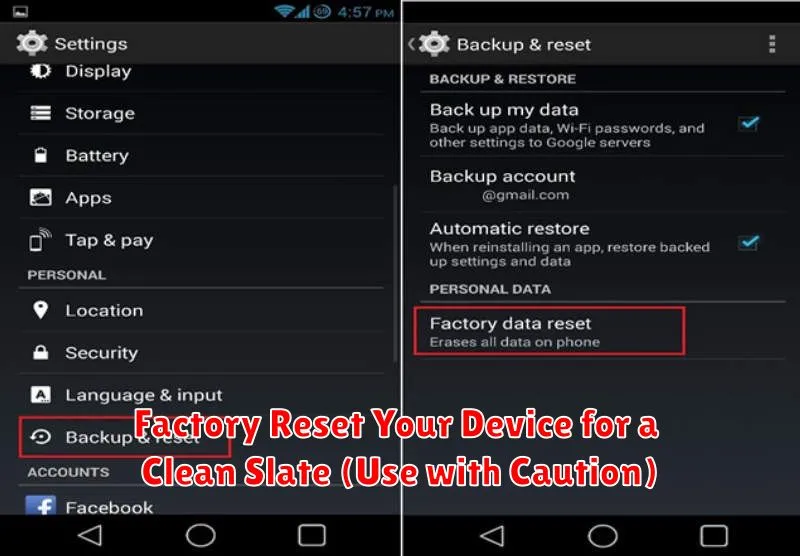
A factory reset returns your device to its original state, effectively erasing all user data and installed apps. This can be a powerful way to resolve persistent performance issues caused by corrupted files, software conflicts, or accumulated data. However, it’s crucial to back up your data before proceeding, as everything will be deleted.
The reset process varies slightly depending on your device’s manufacturer and Android version, but generally involves accessing the “System” settings, then “Backup & reset,” and finally selecting “Factory data reset.” Confirm your choice, and your phone will begin the reset process. Once complete, your device will restart, and you’ll need to set it up as if it were new.
While a factory reset can offer a significant performance boost, it should be considered a last resort after exhausting other troubleshooting options.
