
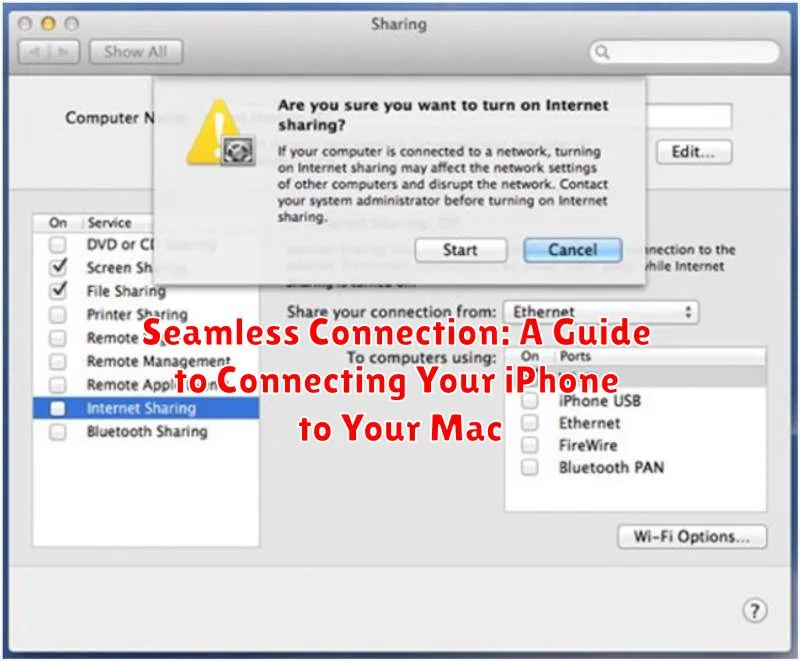
In today’s interconnected world, seamless connection between devices is paramount. This guide focuses on the iPhone and Mac ecosystem, providing a comprehensive overview of methods to establish a strong and reliable connection between your devices. Whether you are looking to transfer files, sync data, or create a unified workflow, understanding the various connection options available is crucial. Learn how to leverage features like AirDrop, iCloud syncing, and direct USB connections for a truly integrated experience. This guide will cover connecting your iPhone to your Mac for a variety of purposes, simplifying complex processes and enhancing your productivity.
From simple tasks like backing up your iPhone to more complex procedures such as using your Mac’s display as a second monitor for your iPhone, this “Seamless Connection” guide will equip you with the knowledge to effectively bridge the gap between your iPhone and Mac. Explore the numerous benefits of a seamless connection, such as streamlined data transfer, efficient device management, and the convenience of a unified Apple ecosystem. Discover how to optimize your workflow and maximize the potential of your iPhone and Mac working together in perfect harmony.
Preparing Your iPhone and Mac for Connection
Before establishing a connection, ensure both your iPhone and Mac meet the necessary requirements. This involves checking software versions and ensuring basic settings are enabled.
Software Updates
Updating your iPhone and Mac to the latest software versions is crucial for compatibility and optimal performance. Outdated software can sometimes hinder connectivity or limit available features. Check for updates on your iPhone in the Settings app and on your Mac through the Software Update section in System Preferences.
Enabling Wi-Fi and Bluetooth (for Wireless Connections)
For wireless connection methods like AirDrop and Continuity features, ensure both Wi-Fi and Bluetooth are enabled on your iPhone and Mac. These can be toggled on through the Control Center on your iPhone and the menu bar or System Preferences on your Mac.
Checking iCloud Settings
If you plan to utilize iCloud Sync, confirm that you are logged in with the same Apple ID on both your iPhone and Mac. This allows for seamless synchronization of data across devices. Verify this in the iCloud settings on both devices.
Connecting via USB: Quick and Easy
Connecting your iPhone to your Mac using a USB cable is the most straightforward method, offering a fast and reliable connection for various tasks.
First, ensure you have the appropriate USB cable. A Lightning to USB cable is standard for most modern iPhones. Older Macs might require a USB-A to Lightning cable, while newer models often utilize USB-C.
Simply plug the Lightning end of the cable into your iPhone’s charging port, and the other end into a corresponding USB port on your Mac. Your Mac should automatically detect your connected iPhone.
Upon connection, you’ll typically see a prompt on your iPhone asking whether you trust this computer. Tap “Trust” to proceed. This step is crucial for enabling various functionalities, such as data transfer and device management.
Once trusted, your iPhone will appear in the Finder sidebar, allowing you to access its contents, such as photos, videos, and files. You can then manage your iPhone data directly from your Mac using the Finder interface.
Wireless Connection: AirDrop for File Sharing

AirDrop provides a swift, wireless method for transferring files between your iPhone and Mac. Ensure both devices have Wi-Fi and Bluetooth enabled. Proximity is key, so keep your devices close together for optimal performance.
On your iPhone, open the share sheet for the file you wish to transfer. Look for the AirDrop icon and select your Mac from the list of available devices. On your Mac, a notification will appear, prompting you to accept the file.
AirDrop relies on both Wi-Fi and Bluetooth to establish a connection and transfer files. Ensure AirDrop is discoverable in your Mac’s Control Center. You can choose to be discoverable by everyone or just your contacts. For increased security, opting for contacts-only discovery is recommended.
Transfer speeds are generally fast, making AirDrop ideal for sharing photos, videos, and documents. However, very large files might take longer to transfer. Monitor the progress on both devices.
iCloud Sync: Keeping Everything in Harmony
iCloud offers a powerful way to synchronize data between your iPhone and Mac, ensuring consistency across your devices. This seamless synchronization happens automatically in the background, keeping your information up-to-date effortlessly.
Key Features of iCloud Sync:
- Photos: Access your entire photo library on both devices, with new photos and videos syncing automatically.
- Contacts: Keep your contacts consistent across all your Apple devices.
- Calendars: Manage your schedules efficiently with synchronized calendars.
- Notes: Create and edit notes that are accessible on both your iPhone and Mac.
- Reminders: Stay organized with synced reminders, ensuring you never miss a task.
- iCloud Drive: Store files and access them from any device.
To enable iCloud Sync, ensure you’re signed in with the same Apple ID on both your iPhone and Mac. You can manage what data is synced through the iCloud settings on each device. This provides granular control over which information is shared and kept consistent, allowing you to customize the sync experience to your specific needs.
Using Continuity Features: Seamless Workflow
Continuity features bridge the gap between your iPhone and Mac, creating a unified experience. These features allow you to start tasks on one device and seamlessly transition to the other, boosting your productivity.
Handoff
With Handoff, you can start working on a document, email, or message on your iPhone and pick up right where you left off on your Mac, and vice versa. Ensure Handoff is enabled in both your iPhone’s General settings and your Mac’s General System Preferences.
Universal Clipboard
The Universal Clipboard lets you copy text, images, photos, and videos on one device and paste them onto another Apple device logged in with the same Apple ID. This eliminates the need for cumbersome workarounds.
Phone Calls and SMS
Make and receive phone calls directly on your Mac, even if your iPhone is in another room. Similarly, send and receive SMS messages from your Mac, maintaining a centralized communication hub.
Troubleshooting Connection Issues
Occasionally, you might encounter problems connecting your iPhone to your Mac. This section provides troubleshooting steps to help resolve common issues.
Check the Basics
First, ensure both your iPhone and Mac are updated to the latest software versions. Restarting both devices can often resolve minor software glitches that might be interfering with the connection.
Cable and Ports
Inspect your USB cable for any visible damage. Try a different cable if possible. Also, try different USB ports on your Mac. Sometimes a specific port might be malfunctioning.
Trust This Computer
When connecting your iPhone, ensure you’ve tapped “Trust” on your iPhone when prompted. This authorizes the connection and allows data transfer.
Network Settings
If using a Wi-Fi connection for certain features, ensure both your iPhone and Mac are on the same network. Network inconsistencies can sometimes disrupt the connection.
Advanced Connection Options
Beyond the standard USB and Wi-Fi connections, several advanced options facilitate specific tasks and workflows between your iPhone and Mac.
Network Sharing
Network sharing allows your Mac to utilize your iPhone’s cellular data connection. This is particularly useful in areas with limited Wi-Fi availability. Enabling this feature creates a personal hotspot directly from your iPhone to your Mac.
Remote Management
For developers or IT professionals, remote management tools provide advanced control over iOS devices. These tools allow for installing apps, configuring settings, and managing profiles directly from your Mac, simplifying device deployment and maintenance.
Content Caching
Content caching on your Mac can accelerate software updates and iCloud downloads for your iPhone and other Apple devices on the same network. Downloaded content is stored locally on your Mac, reducing download times and internet bandwidth usage.
